


Meghalaya, known as the “Abode of Clouds,” is one of the most beautiful states in Northeast India. Beyond its green hills, waterfalls, caves, and living root bridges, Meghalaya is also known for its unique culture, traditional lifestyle, colorful festivals, and flavorful food. The state is home to several indigenous communities, with the Khasi, Jaintia, and […]
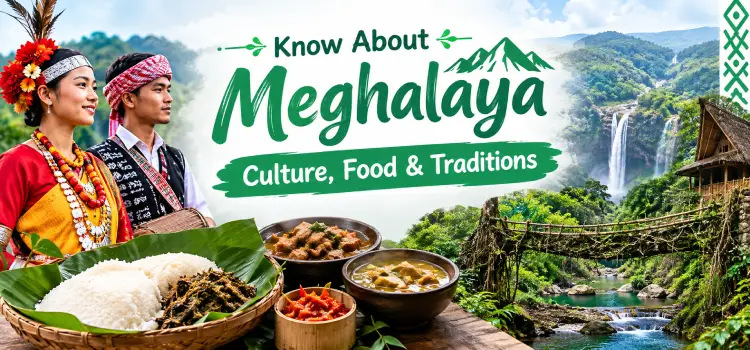
Meghalaya, known as the “Abode of Clouds,” is one of the most beautiful states in Northeast India. Beyond its green hills, waterfalls, caves, and living root bridges, Meghalaya is also known for its unique culture, traditional lifestyle, colorful festivals, and flavorful food. The state is home to several indigenous communities, with the Khasi, Jaintia, and Garo peoples forming its major cultural groups.
The culture of Meghalaya reflects a strong connection with nature, community, music, traditional customs, and local heritage. From traditional dances and festivals to unique food habits and social traditions, every part of Meghalaya offers an opportunity to understand the history and identity of its people.
A Glimpse of Meghalaya Culture
Meghalaya has a diverse cultural identity shaped by its indigenous communities. The Khasi, Jaintia, and Garo communities have their own languages, customs, festivals, clothing styles, music, and traditions. At the same time, they share a deep respect for nature and community life.
One interesting feature of Meghalaya society is the traditional importance of the maternal line among the Khasi and Jaintia communities. In many families, property and family names have traditionally been associated with the mother’s side. The youngest daughter may have an important role in caring for parents and preserving family property.
The Garo community also has its own distinctive traditions and social customs. Together, these communities contribute to the rich cultural diversity that makes Meghalaya different from many other parts of India.
Traditional Festivals of Meghalaya
Festivals are an important part of Meghalaya’s cultural life. They bring communities together through music, dancing, traditional clothing, food, and religious or seasonal celebrations.
The Wangala Festival is one of the best-known festivals of the Garo community. Often associated with the harvest season, it is celebrated with traditional music, drums, dancing, and colorful clothing. The festival is sometimes described as a celebration of the end of the agricultural year.
The Khasi community celebrates festivals such as Shad Suk Mynsiem, which is an important cultural and religious celebration. Traditional dances, music, and ceremonial clothing are major parts of the event.
Another important celebration is Behdienkhlam, associated with the Jaintia community. It features traditional rituals, dancing, music, and community participation.
These festivals provide an opportunity for younger generations to learn about their heritage while allowing visitors to experience Meghalaya’s traditional culture.
Traditional Food of Meghalaya
Food is an important part of Meghalaya’s cultural identity. Traditional cuisine generally makes extensive use of locally available ingredients, including rice, vegetables, herbs, bamboo shoots, and meat. Cooking styles vary between communities and regions.
Jadoh is one of the popular dishes associated with Khasi cuisine. It is generally prepared using rice and meat and is known for its rich and distinctive flavor.
Dohneiihong is another traditional Khasi dish that combines pork with black sesame. The use of locally familiar ingredients gives the dish a distinctive taste.
Doh Khlieh is a traditional pork-based preparation often served with onions, chillies, and other ingredients. It is enjoyed as part of local Khasi cuisine.
Rice is an important staple in Meghalaya, and several traditional preparations use rice as their primary ingredient. Local vegetables, fermented foods, herbs, and bamboo shoots also feature in many meals.
Meghalaya’s food culture demonstrates how local communities have developed cooking traditions based on the ingredients naturally available in their environment.
Traditional Clothing and Handicrafts
Traditional clothing is another important part of Meghalaya culture. Different communities have distinctive styles of dress that are particularly visible during festivals and cultural events.
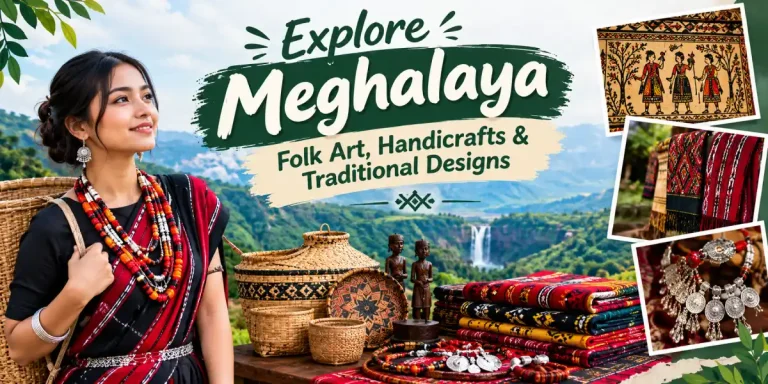
Khasi women traditionally wear garments such as the Jainsem, while Garo women have their own traditional clothing styles. Traditional accessories, jewelry, and colorful fabrics are often used during ceremonies and celebrations.
Handicrafts are also connected with Meghalaya’s cultural heritage. Bamboo and cane are widely used to create baskets, household products, decorative items, and other useful objects. These crafts reflect traditional skills that have been passed from one generation to another.
Local handicrafts also provide opportunities for artisans and help preserve traditional knowledge.
Music and Dance Traditions
Music and dance are central to cultural celebrations in Meghalaya. Traditional instruments, drums, pipes, and other musical forms accompany many community festivals.
Traditional dances are usually performed during festivals and important cultural occasions. The movements, costumes, music, and group participation often reflect the history and traditions of the particular community.
For example, Garo celebrations associated with Wangala include energetic traditional performances accompanied by drums and other instruments. Khasi festivals also feature traditional dance forms performed as part of cultural ceremonies.
These performances are more than entertainment. They are an important way of preserving stories, customs, community identity, and traditional knowledge.
Meghalaya’s Connection With Nature
One of the most important characteristics of Meghalaya culture is the close relationship between communities and their natural surroundings. The state’s forests, rivers, hills, caves, and agricultural areas have influenced local lifestyles for generations.
The famous living root bridges are a remarkable example of traditional knowledge and interaction with nature. Communities have trained the roots of certain trees to form strong natural bridges across streams and valleys. Some of these structures have developed over many years and demonstrate how local knowledge can work together with the environment.
Traditional environmental practices can also be seen in community-managed forests and sacred natural areas. These places are connected with cultural beliefs and local customs and can play an important role in protecting biodiversity.
Languages and Cultural Identity
Meghalaya is linguistically diverse. Khasi, Garo, and Pnar are among the important indigenous languages spoken in the state, while English is an official language. Other languages are also spoken by different communities.
Language plays an important role in preserving cultural identity. Traditional songs, stories, oral histories, and community knowledge are often passed between generations through local languages.
Modern education, technology, tourism, and social media are bringing new influences to Meghalaya. However, local communities continue to preserve many aspects of their traditional identity through festivals, language, food, music, and cultural activities.
Tourism and Meghalaya’s Cultural Heritage
Tourism has helped introduce Meghalaya’s culture to visitors from across India and around the world. Places such as Shillong, Cherrapunji, Mawlynnong, Jowai, Tura, and other parts of the state attract visitors for their landscapes as well as their cultural experiences.
Visitors can explore local markets, taste traditional food, observe handicrafts, and experience cultural festivals. Responsible tourism is important because it allows travelers to enjoy Meghalaya while respecting local communities, traditions, and natural resources.
Travelers should follow local customs, avoid damaging natural or cultural sites, and support local artisans and businesses whenever possible.
Why Meghalaya Culture Is Special
The culture of Meghalaya is a combination of indigenous traditions, community values, natural heritage, food, music, festivals, and craftsmanship. The Khasi, Jaintia, and Garo communities have each contributed distinctive traditions to the cultural landscape of the state.
From traditional dishes and colorful festivals to living root bridges and indigenous crafts, Meghalaya offers much more than scenic beauty. Its cultural heritage provides a deeper understanding of how communities have maintained their traditions while living closely with nature.
Exploring Meghalaya through its culture, food, and traditions can make a visit more meaningful. It allows travelers and readers to appreciate not only the state’s landscapes but also the people, customs, and heritage that make the “Abode of Clouds” unique.